Saturday, February 23, 2013

Stressing with Karl Marx


             Stress has been looked at for years and there are hundreds of studies on stress.  With the many different studies, there are also many different perspectives, or lens, one may view stress through.  Different lens will provide different opinions about stress and in this blog post, I will view stress through a Marxist lens.
             The Marxist lens will look at something while keeping ideas about capitalism, the proletariat, and class struggle in mind.  Arguably, the most important thing in life is happiness.  Happiness is unique to every person, but there are still some basic things that most people can agree make someone happy, two of which are family/love and money.  Love in any way will make a person happy, and families are perfect representation of love.  However, money is needed for a family to survive and a surviving family is a happy family.  Wealth allows for an easier life and when already happy with love, an easier life is icing on the cake.  
             Unfortunately, we live in a society where money is not granted to everyone and people will lack the money to live comfortably or even to shelter or feed their families.  A lack of money may cause severe stress and this can be blamed on capitalism.  The bourgeois are living easily while the proletarians are stressing just to live the next day, to make sure their family survives.  In a capitalist system, it is the survival of the fittest.  While capitalism may grant some people all the wealth they can imagine, the system is unequal and seen in the stress of people.  Even those who are well off are stressed by capitalism.  Having to manage money, pay extraordinary taxes, and maintain a affluent lifestyle will put stress upon a person.  In an equal Marxist system people would not stress about these issues and thus viewing stress though a Marxist lens it is easy to critique capitalism and blame everyone’s stress ultimately on capitalism. Diagnosing stress is similar to diagnosing a mental illness.  In the same way mental illness is subjective to a time period, stress is subjective to a lens.  There is no one correct way to view stress (or mental illness), but the more lenses understood, the greater the understanding of stress as a whole.

Tuesday, February 12, 2013

Stress is in the Air!


February 14, Valentine’s Day.  It’s that time of year again where either you are with someone or alone.  No matter what situation you are in, Valentine’s Day can be quite stressful and I’m here to help relieve some of those unwanted feelings.
If you are the person who doesn’thave that someone special in your life then there are some simple mentalities you need to have to de-stress your Valentine’s Day.  First, you cannot sulk and feel downtrodden over the fact that you don’t have a boy/girlfriend because the truth of the matter is, there are so many people that still love you.  Spend time with your family on this day and be surrounded by those who do love you, including pets!  Try to no focus on the romantic part of Valentine’s Day and be grateful for all you have.  It’s stressful to see some of your friends with their partner, but realize that there are many of your friends who don’t have anything to do on that day either and that you should try to be with them as well, (unless you enjoy family time more).  A completely different idea on how to deal with the stressful Valentine’s Day is to completely ignore it and pretend that it doesn’t exist.  Just live that day like any other Thursday in your life and don’t even fret about the events that go on during that day.  Don’t falter from your regular routine and zone out the love birds that are obnoxiously swooping and swooning around you.  Find the people who love you, the people who care, or just choose ignore it all, and I guarantee your Valentine’s Day won’t be stressful.
Not every is necessarily alone on this day and for those of you who do have that significant other, it can be quite the stressful day.  For the guys, I know that you are expected to bring a bouquet of roses and hearts of chocolate and take your girl out to a fancy dinner and be all romantic and perfect.  But it’s the last word that causes all the stress: perfect.  Being perfect is impossible and you need to accept the fact that you will not be perfect.  Tradition states that you need to heighten your romanticism, but to what extent is the question, a question that you need to have with your partner.  Make expectations.  You should be comfortable enough with your significant other to be able to ask how Valentine’s Day should be spent, what they find romantic so you don’t have to guess, and just their overall feelings on the holiday (they might even despise it!)  For the girls, I understand that you like spontaneous and extravagant, but lower your expectations.  Don’t stress over whether or not you will get flowers, but as odd as it may sound, have low expectations, that way if your boyfriend decides to do that extra something, then you will be twice as happy and certainly feel no stress.  Communication is key for any stress-free relationship, especially during Valentine’s Day.  In addition, if your partner only sees your love on Valentine’s Day then you have not been doing a good enough job the rest of the year.  Remember to not “make it into a huge test. Express your love every single day and you will be better off in the long run."  Have a stress-free, happy Valentine’s Day.

Tuesday, January 29, 2013

Another Type of Stress

I hate stress.  You hate stress.  Let’s be honest, nobody enjoys stress.  However, there are different definitions of stress.  Besides the common definition of stress as a hindrance on the mind of a person it can also be used to show the “importance attached to a thing, or significance, meaning,emphasis, consequence; weight, value, worth.”  Some people say stress over the menial is wrong and that people don’t stress the important,  but it’s time to clear this up.  When we neglect to focus on the small and ignore those little things, then we will eventually drive ourselves insane without our knowledge of doing so.  It is significant to take value in all the small parts of life and never take anything for granted, yet people are taking their focus and effort and setting aside too much time for only the big things in life.  For all of this I am not discussing focusing on a specific object such as a diamond ring versus a piece of toast, but rather the ideas and values that go behind it.  Obviously spend more time on the diamond ring and put your effort into that, however the ideas behind the toast can be stronger and have a longer lasting effect on a person than the diamond ring.  Besides marriage, a diamond ring doesn’t set a mentality up.  It is so expensive that buying one becomes an inconsistent process, however the piece of toast can completely change your life.  When you choose to make a piece of toast in the morning, you are choosing to set up your day and put enough energy within you to make it to lunch.  This is the mentality that you want raise your mental and cognitive state of mind so that you can succeed. Putting stress on the little things in life can form positive patterns that eventually will lead to not having to even think about those things.  The cliché holds true that every little detail counts and placing an extra emphasis, or stress on those can be more rewarding than you will ever know.  Always remember that it’s the little things in life that truly make a person happy and that make a person’s life whole. 
Do not stress over the small details, but rather stress the small details and make them important.  Do no let the seemingly big things take away all your time, for one day you will realize that the little things are the true big things.

Wednesday, January 2, 2013

Stress in Japan? Not that bad.


In this day and age people are stressed and so are countries.  The bottom billion of the world are caught within four traps that are making their life quite stressful, but the country I will explore, Japan seems to have successfully avoided all four of these traps and is not nearly as stressed as the bottom billion. 
Japan does not fall under the conflict trap, however Japan is experiencing external conflict with China and Japan.  Japan and China are currently dealing with a century long dispute over the Diaoyu (Chinesename)/Senkaku (Japanese) islands in the East China Sea.  Both countries claim ownership of these islands and neither side is willing to loosen its grasp on them.  These islands provide many resources such as oil and fishing that makes them valuable to each country.  In response to this conflict, riots are breaking out throughout China where the Chinese are burning Japanese flags and destroying Japanese shops in China.  China is now trying to control large and dangerous anti-Japanese protests, which largely consists of burning down and destroying Japanese factories such as car dealerships, which is an especially big problem since Japan has $12.6 billion of investments in China.  Many protesters from both Japan and China are traveling to the island and trying to declare them either Chinese or Japanese.  To add to this, the Japanese have another dispute with South Korea over the Dokdo (South Korean name)/Takeshima (Japanese name) islands.  Japan is becoming more and more isolated in East Asia as it has territorial disputes with most of its neighbors, however, internally Japan is extremely stable and hasn’t had any notable internal conflict for hundreds of years.
Japan also does not fall under the natural resource trap.  Japan is an industrial country that focuses on motor vehicles and electronic equipment.  Japan is not abundant with natural resources as 21.2% of Japan’s imports are petroleum and natural gas.  Japan also doesn’t feel the same effects of natural resource trap with automotives.  Japan is not fully dependent on the export of motor vehicles and its economy is made up of multiple different industries.  Japan feels no sense of Dutch Disease.  Due to the lack of natural resources Japan has fallen into conflict with countries over the natural resources of neighboring islands.
                Japan is the epitome of the opposite of the landlocked conflict due to the fact that Japan is an island and locked by water on every side.  Japan can tap into world economic growth and trade with whomever Japan wants to.  The infrastructure in Japan is also at a superb standard. 
                Japan’s governing for the most part has been pretty sound.  Recently there were elections that put in place the old government of Japan, the Liberal Democratic Party lead by ShinzoAbe, replacing the Democratic Party of Japan.  The LDP plans on shaking off Japan’s economic stagnation and keeping a tough stance with China over the islands in the East China Sea. 

Wednesday, December 12, 2012

Stressed Shadows


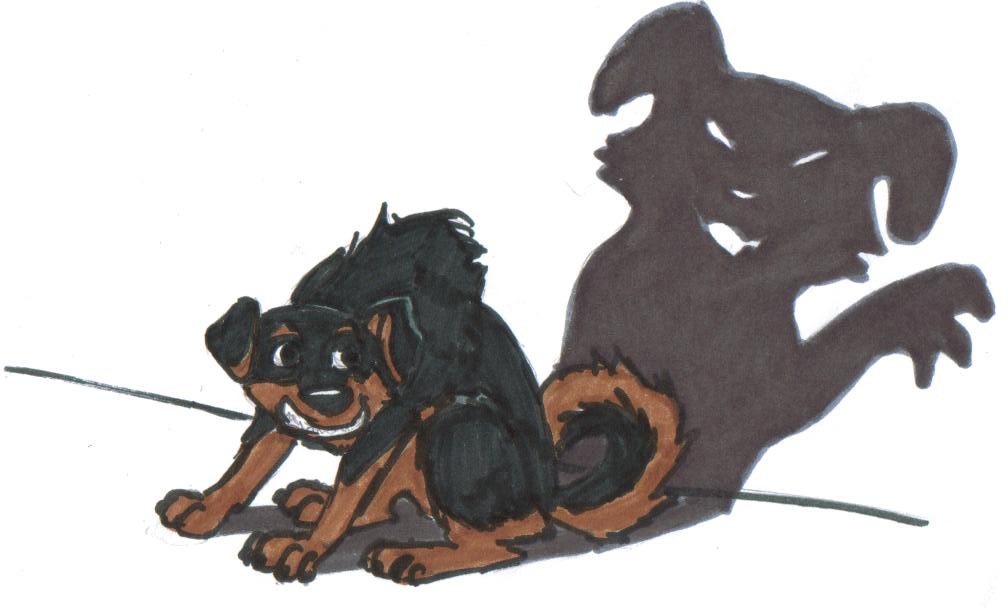
Our shadow follows us everywhere.  It looms over us like a dark cloud which cannot only be scary but quite stressful. The term shadow causes many people to think about their shadow on the ground from the overhead sun, however there is another, even more personal shadow present.  The shadow I’m discussing is Carl Jung’s definition of a shadow as “the ‘negative’ side of the personality, the sum of all those unpleasant qualities we like to hide, together with the insufficiently developed functions and the contents of the personal unconscious.”  The shadow represents all the qualities that a person loathes or that society deems unpleasant.  A shadow is formed through both nature and nurture.  Some children are born with innate qualities such as a “mean streak”, however, the surroundings a child grows up in also defines the shadow of the child.  Few people embrace the shadow, rather most run in fear of it, but everyone knows that it is impossible to outrun your shadow.
There are layers upon layers of Jung's theory about the shadow, but I am going to discuss it in its most basic form as the anti-personality.  To many, it becomes quite stressful as people feel their shadow creep up on them and slowly start clashing with their “light”, their societal personality.  The shadow embodies everything negative that we don’t want to see ourselves as and when something we don’t want invades our life, stress ensues and a cycle begins.  In moments of stress your shadow pushes aside your light and lashes, striking both the target and often the unintended innocent.  Often when we get angry, we are unable to control our shadow.  However, if you are being mean to someone, who does not deserve it, that might stress you out since in hindsight you may get angry at yourself for having been mean.  Your shadow can lead to stress and stress can lead to your shadow becoming visible.  As a response to this, people will fight their shadow as if it were the epitome of evil.  Brian Seaword mentions in his blog that it is more damaging to fight against your shadow and it is better to embrace it and learn from it.  In Fight Club Edward Norton ends up physically beating himself up, without knowing it, by fighting his shadow.  The shadow will never disappear, it can only be tamed.
There is also another aspect of the shadow that is frightening and an obstacle, the fact that the shadow is typically subconscious.  The uncertainty of the shadow is quite formidable and scary.  Do you know your inner beast?  Would you recognize it as your shadow?  More importantly, do we want to know?  Now this begs the question, how do we control something we can’t see?   For all the kids reading this, ask yourself, how many times has a parent or teacher told you that you need to control your anger or that your emotions clouded your judgment?  (I am not saying that anger is bad, but only in moderate amounts can it be acceptable.)  Most likely, the answer is more than once.  Shadows feed on ill perceived opportunity and pop out when blinded by stress. 
Calming your shadow is a classic example of learning from past experiences, and a natural part of advancing from childhood to being an adult.  Some do it better than others.  When you are in a stressed situation, you need to train yourself to not lash out, but stop and think about what you are going to do, the calm rational way out.  The cliché counting to ten may seem silly, but is extraordinarily successful in reducing your rage or any other shadow emotion.  I’ll admit it is quite difficult to control yourself, but over time, experience will show that controlling your shadow in a stressful situation will prove beneficial in the long run.  This is an interesting video on Jung’s shadow.   


(On a completely unrelated topic to shadows, here is some nice, quick, stress-relieving music from How to Train your Dragon (an excellent movie)) http://www.youtube.com/watch?v=r9TanR_3M0o